
How to Make a Small Bedroom Look Bigger: 10 Designer Tricks
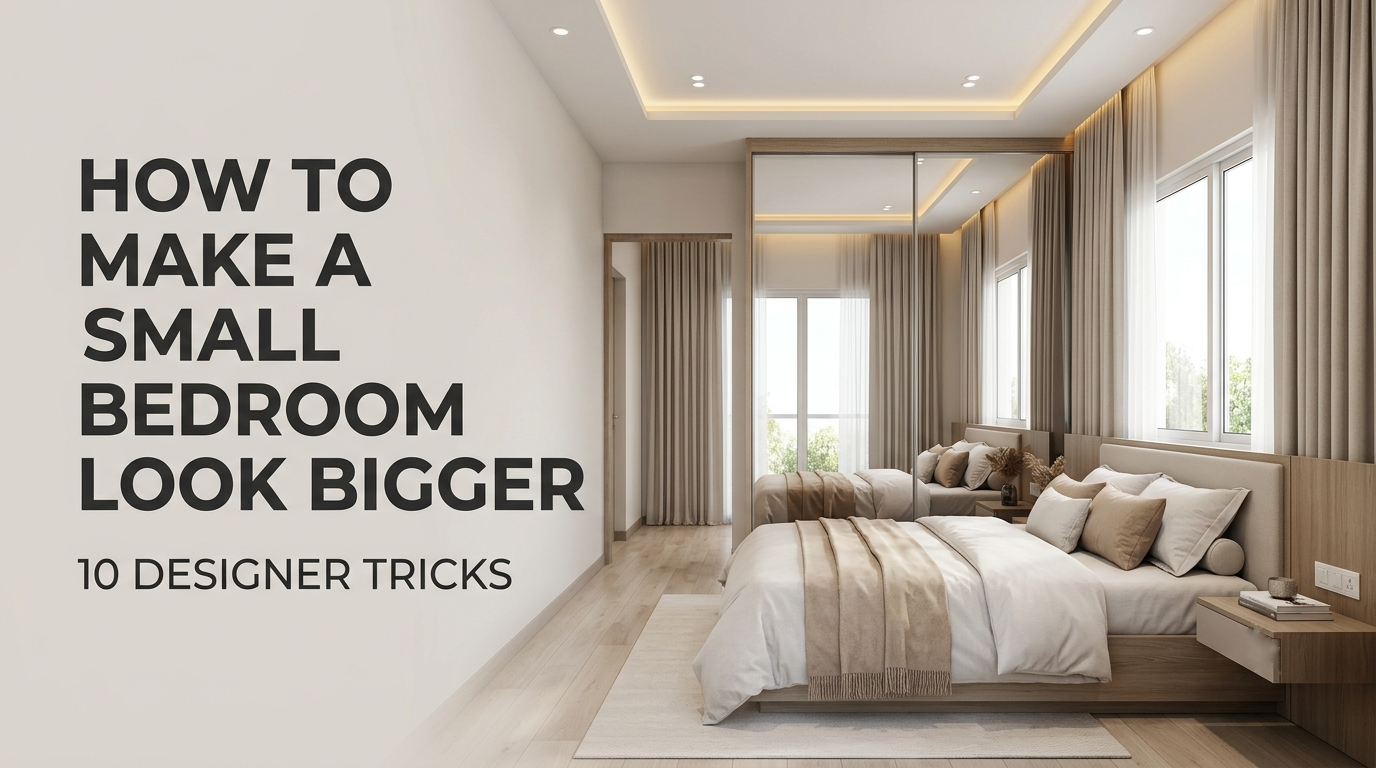
How to Make a Small Bedroom Look Bigger: 10 Designer Tricks
A small bedroom doesn’t have to feel like a box. With a few smart tweaks to your layout, lighting, and furniture, even the tightest space can feel open, airy, and effortless to live in.
Interior designers rely on simple visual tricks—not magic—to fool the eye into seeing more square footage than actually exists. Here are 10 practical ways to open up a compact bedroom without sacrificing comfort or style.
1. Stick to Light, Neutral Wall Colours
The fastest way to open up a cramped room is to paint the walls and ceiling in light, reflective shades. Whites, warm creams, soft greys, and muted pastels bounce natural light around the room, making the boundaries feel further away.
Darker shades can feel cosy, sure—but in a tight footprint, they tend to pull the walls inward.
Designer Tip: Paint your walls, ceiling, and trim in the exact same shade (or very close tones). Removing sharp colour contrasts blurs where the walls end and the ceiling begins, making the room feel noticeably larger.
2. Put Mirrors to Work
Mirrors are a classic designer shortcut for a reason: they double your light and create instant visual depth. Instead of hanging a tiny decorative mirror, go as big as your wall or wardrobe allows.
Good places to sneak them in:
- Full-length mirror panels on wardrobe shutters
- A tall leaning mirror propped against an empty corner
- A wide mirror hung directly above a dresser or console
Designer Tip: Place your largest mirror directly across from—or right next to—a window. It will catch the daylight and throw it into the darker corners of the room.
3. Choose Furniture That Pulls Double Duty
When square footage is tight, single-purpose furniture is a luxury you can’t afford. Swap out bulky, traditional pieces for smart, multifunctional designs that hide clutter out of sight.
Look for pieces like:
- Hydraulic or drawer-storage beds to stash extra bedding and seasonal clothes
- Wall-mounted bedside shelves instead of chunky nightstands
- Fold-down desks that tuck flat against the wall when you’re off the clock
- Storage ottomans at the foot of the bed for extra seating and hidden storage
4. Keep the Floor as Clear as Possible
The more floor you can see, the bigger the room feels. When heavy furniture sits flush against the ground in every corner, the room starts feeling crowded fast.
Free up visual breathing room by choosing furniture on slender, raised legs—or better yet, floating pieces mounted straight onto the wall. When light can pass underneath your bed and side tables, the whole room feels lighter.
5. Build Up, Not Out
If you’re out of floor space, look up. Taking your storage vertical draws the eye toward the ceiling and makes the room feel taller while keeping your walking path clear.
- Floor-to-ceiling wardrobes: Eliminates that awkward dust-collecting gap at the top and gives you an extra shelf for suitcases or winter blankets.
- Tall, narrow bookcases instead of wide, squat dressers.
- Floating shelves stacked vertically above a desk or headboard.
6. Layer Your Lighting
Relying on a single harsh ceiling light leaves dark corners—and dark corners make a room shrink. A well-lit bedroom feels open, warm, and inviting.
Aim for a mix of three light sources:
- Ambient light: Recessed ceiling lights or a flush-mount fixture for overall brightness.
- Task light: Wall-mounted swing-arm sconces or slim bedside lamps for reading.
- Accent light: Warm LED strip lighting tucked into a false ceiling cove or behind the headboard to add soft depth.
7. Hang Curtains Higher and Wider
Where you mount your curtain rod changes the proportions of the entire wall. If you screw the rod right onto the top of the window frame, you visually cut the wall in half.
Instead, mount the rod 4 to 6 inches below the ceiling and let the fabric fall all the way to the floor. Extending the rod a few inches past the window frame on each side also lets you pull the curtains completely clear of the glass during the day, letting in maximum sunlight. Stick to breezy linens or sheer neutrals rather than heavy velvets.
8. Edit Down the Decor
Visual clutter shrinks a room just as fast as physical clutter. Busy wallpaper patterns, mismatched cushions, and crowded gallery walls force the eye to bounce around constantly, making the space feel chaotic.
Keep things calm and intentional:
- Stick to two or three complementary textures (like linen bedding, warm wood, and matte metal).
- Choose one larger piece of wall art instead of ten small frames.
- Keep dresser tops and nightstands clear of everyday odds and ends.
9. Switch to Sliding Wardrobe Doors
Standard hinged wardrobe doors need at least two to three feet of clear floor space just to swing open—space that often collides with the edge of your bed in a compact room.
Sliding doors solve that problem instantly. Better still, you can finish the shutters in high-gloss laminate, fluted glass, or full-height mirrors to bounce even more light across the bedroom.
10. Keep Finishes Consistent
Too many competing materials chop a small room into visual segments. Aim for a smooth, uninterrupted flow from one side of the room to the other. Matching your wardrobe laminate closely to your wall colour, or keeping the same flooring running seamlessly from the hallway into the bedroom, tricks the eye into reading the space as one continuous, expansive zone.
5 Common Small-Bedroom Mistakes to Avoid
Even expensive furniture won't save a room if the scale is off. Watch out for these frequent missteps:
- Buying an oversized bed: A king-size bed that leaves only 12 inches to squeeze past the sides will make the whole room feel suffocating. A queen bed with sleek framing is usually the sweet spot.
- Blocking natural light: Placing a tall wardrobe or headboard partially in front of a window kills your best source of openness.
- Heavy, dark drapes: Thick blackout curtains in dark colours act like a visual wall when closed. Layer sheer curtains behind lighter-toned drapes instead.
- Ignoring under-bed space: Leaving the area under your bed empty—or worse, shoving loose boxes underneath—wastes prime storage real estate.
- Overdoing accent walls: A bold, dark accent wall can look great in a large master suite, but in a small room, it often feels like the wall is closing in on you.
Bringing It All Together
Making a small bedroom feel spacious isn’t about knocking down walls—it’s about making every inch work smarter. Light palettes, clever storage, clean lines, and thoughtful lighting can turn even the most compact room into a calm, comfortable retreat.
Ready to rethink your space? At MDG Green Developers, we design residential interiors tailored to real life—combining smart space planning, custom storage, and timeless finishes so every square foot feels effortless. Get in touch with our team to start planning your bedroom makeover.
Frequently Asked Questions
What paint colours make a small bedroom look biggest?
Soft whites, warm creams, light beige, pale grey, and muted pastels work best because they reflect the most natural and artificial light.
Do mirrors really make a bedroom feel larger?
Yes. A large mirror—especially one placed opposite a window—creates an illusion of depth and doubles the amount of daylight bouncing around the room.
What is the best type of bed for a small bedroom?
A queen-size hydraulic storage bed or a sleek platform bed with built-in drawers gives you generous hidden storage without adding bulky chests of drawers to the room.
How do I add storage without crowding the floor?
Go vertical. Floor-to-ceiling wardrobes, wall-mounted bedside units, and floating shelves keep your belongings organised while leaving the floor area clear.
Are sliding wardrobes better than hinged ones for tight spaces?
Almost always, yes. Because sliding doors move side-to-side on a track rather than swinging outward, you can place your bed much closer without blocking access to your clothes.
how to make a small bedroom look bigger
💬 All Comments
No comments yet. Be the first to comment.
Leave a Comment
Share your thoughts about this blog